

MP SPEAKS | Non-Malays are frustrated and angry with Prime Minister Anwar Ibrahim and Pakatan Harapan. Some say they will no longer vote for them or will not turn out to vote at all.
While this is a regrettable situation, their sentiments are understandable.
However, a pause for deeper reflection reveals that your vote still has the power to influence your future and your family’s future.
When you vote, it is not a vote for Anwar (PKR), Ahmad Zahid Hamidi (Umno), Abdul Hadi Awang (PAS), Muhyiddin Yasin (Bersatu), or their political parties. You are voting for yourself and your children.
You are voting for a life where you and your children can flourish with opportunities for growth in a modern democratic nation, living in a society free from insecurity, which cherishes our diversity, practices tolerance, and respects individual dignity.
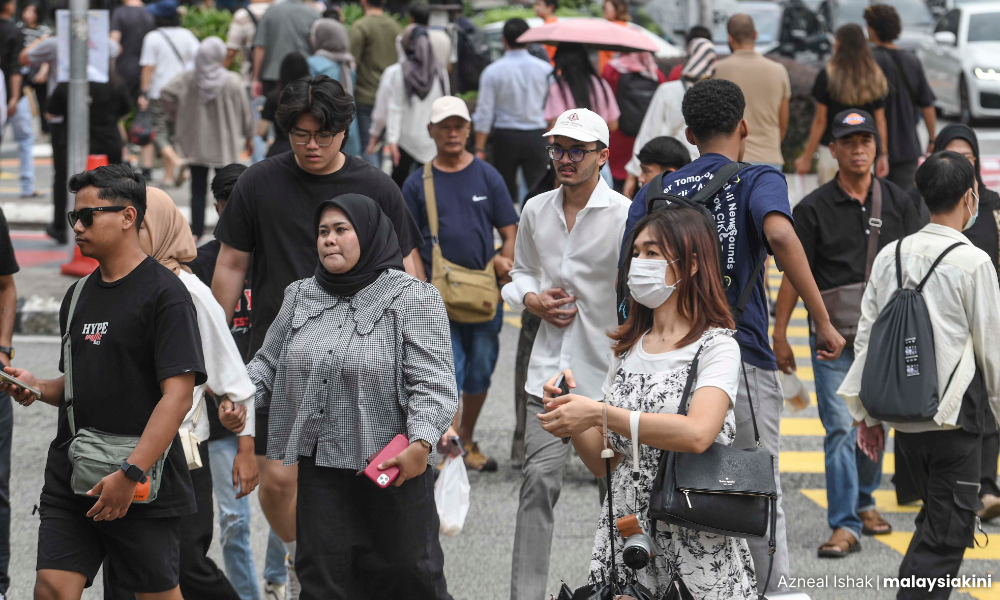
By not voting, you surrender your power to choose your future to someone else, and that someone will not choose what is in your best interest.
There are four issues worth exploring in your reflection.
Disillusionment, frustration, and anger
Firstly, non-Malay feelings of frustration and anger arise from the disappointment, disillusionment, and a sense of betrayal because promised reforms are not delivered, policy compromises are made, and expectations remain unrealised.
These have resulted in voter apathy and reform fatigue.
The disappointment is not because Anwar and Harapan won GE15 to form the government; it is because they did not win GE15 but formed a government.
No coalition won 112 parliamentary seats to form the federal government: Harapan won 81, followed by Perikatan Nasional (74), BN (30), Gabungan Parti Sarawak (23), Gabungan Rakyat Sabah (six), Warisan (three), independents (two), with Muda, KDM, and Parti Bangsa Malaysia winning one each.
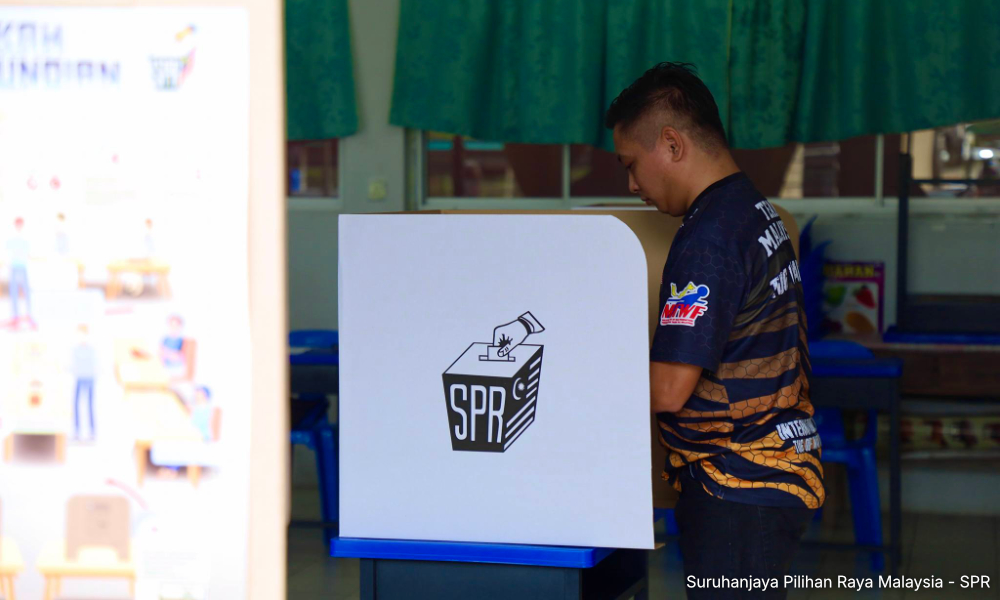
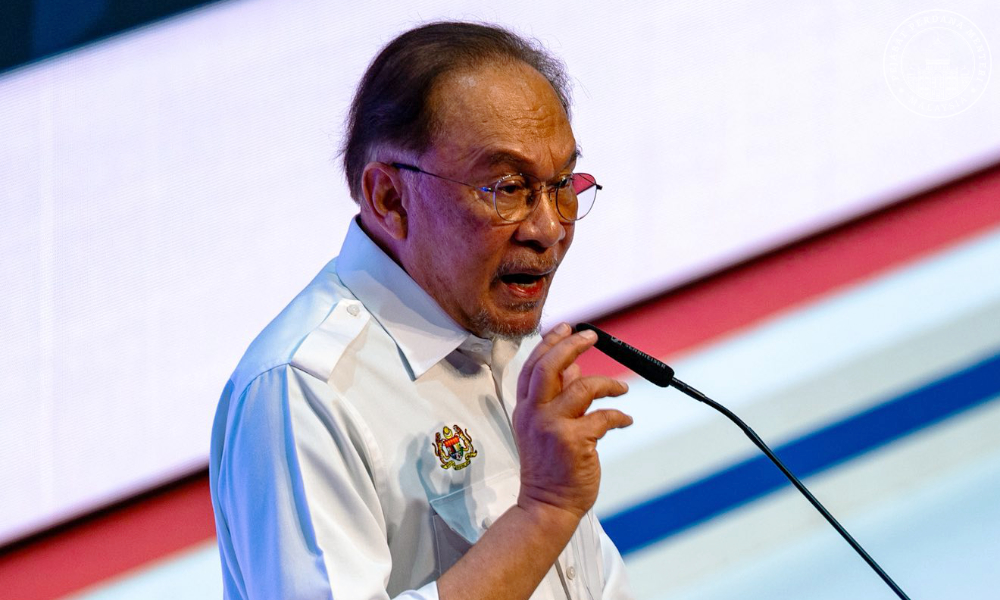
The Yang di-Pertuan Agong called on Anwar to form a unity government since no single political party or coalition won GE15.
Harapan agreed to the unity government for the reason that being part of the government is better than being in the opposition. Delivery of some reforms is better than none.
In other words, Harapan is a minority government in an uneasy post-electoral coalition. It consists of 19 component parties of different ideologies and priorities.
Much time and effort are needed for reforms and policies to secure consensus, compromises, agreement on modifications, sequencing, and priorities from the other component parties.
Unfortunately, Harapan supporters expected all promised reforms to be delivered, not only some.
The disillusionment and disappointment are the consequences of a minority government entering into an uneasy alliance with political parties that are at odds with one another.
The reality is that even if Anwar and Harapan are punished by their disillusioned supporters and obliterated in GE16, whichever parties form the next government will likely face the same situation.
This is because the two-party system has been replaced by a plural party environment.
Post-electoral coalitions would be the likely outcome of GE16 and future Malaysian elections unless the electorate gives an overwhelming majority to one single party or coalition to form the government.
Institutional constraints
Secondly, there are institutional and administrative constraints. Some of the slow progress of reform has to do with the reality of changing a deeply entrenched bureaucracy
However, we also need to acknowledge the flaws and missteps that the Unity Government has committed. These include administrative misjudgments and mistakes.
Some of these are legacy issues from previous administrations. An example is the relocation of the Dewi Sri Pathrakaliamman Temple on Jalan Masjid India.
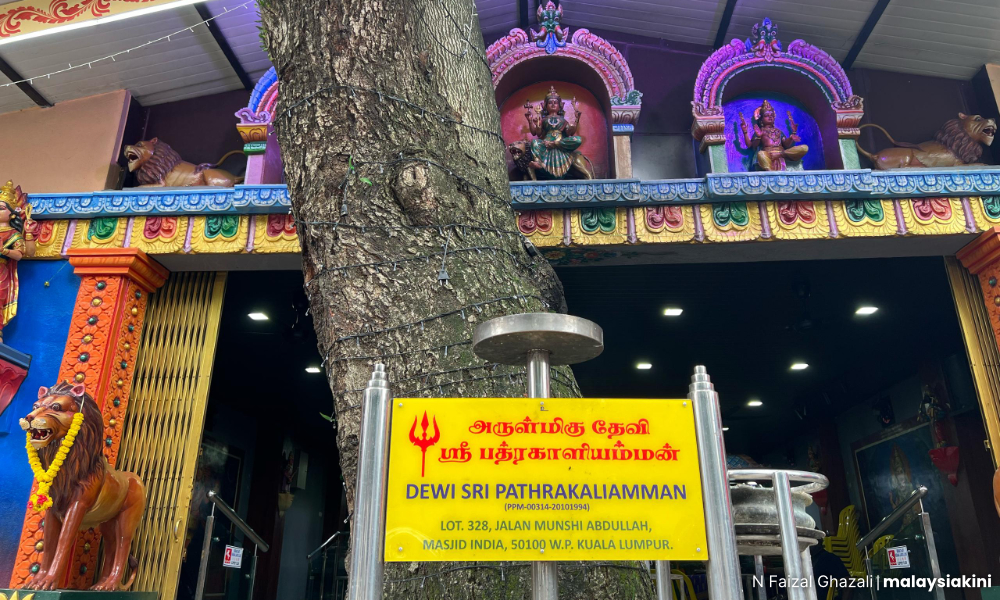
It could have been handled better, but it is not a case of the government issuing a policy for demolishing Hindu temples.
Civil servants and bureaucrats are duty-bound to serve the government of the day and to implement the ruling coalition’s policies.
However, as human beings, embedded within each are bureaucratic culture, beliefs, honest convictions, and operational procedures based on the policies and ideology of previous administrations.
Instances of administrative decisions conflicting with the new reformist approach are bound to occur.
It takes time for the transition of institutional and administrative personnel to change from the practices and mindsets of the previous administration to the new.
Frustration comes when we expect flawless results without accounting for human limitations and difficult prevailing circumstances.
Some flaws and missteps can be attributed to the tightrope that this administration has to walk between sensitive issues such as ethnic conditions, promises made by older administrations, and, in some cases, carelessness.
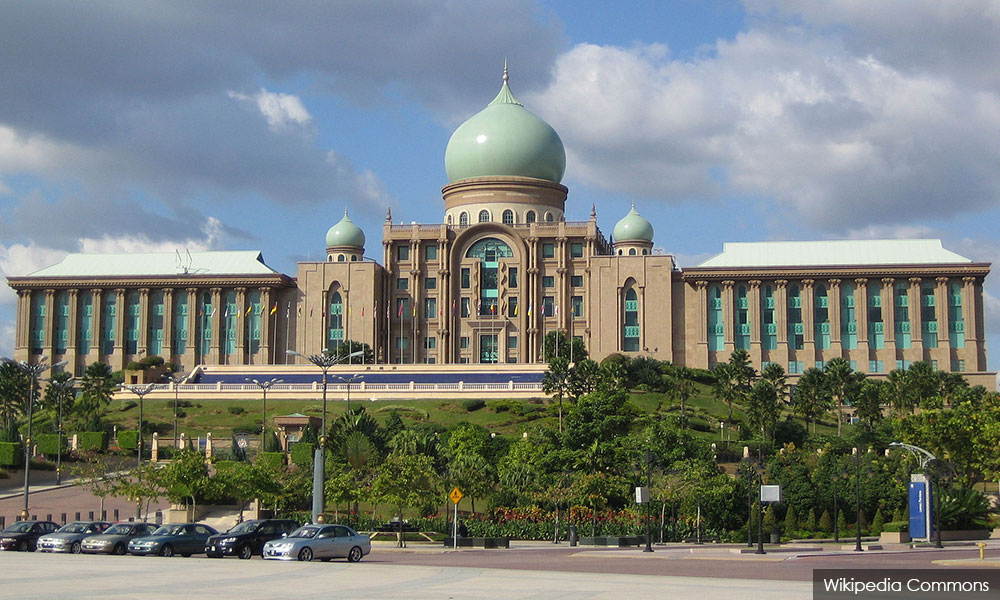
While these are deeply regrettable, we mustn’t lose sight of the fact that many seek to stir racial tensions and seize power for themselves, and the hope is that we can look past some of this administration’s flaws and imperfections to our nation’s future.
Arguably, an imperfect leader who is trying to maintain peace and harmony is better than giving it back to opportunists who are not above harming our social fabric for personal gain.
Green Wave
Thirdly, the decision not to vote may lead to unintended consequences. Reform fatigue may have caused us to lose sight of the dangers posed by the Green Wave.
The Green Wave in GE15 swept PAS to win 43 parliamentary seats to become the largest party in the Dewan Rakyat, and PN won 146 out of the 245 federal and state seats it contested.
This allowed the coalition to steamroll over the north and east coast of Peninsular Malaysia, forming three state governments and making major inroads into Penang, Perak, and Selangor.
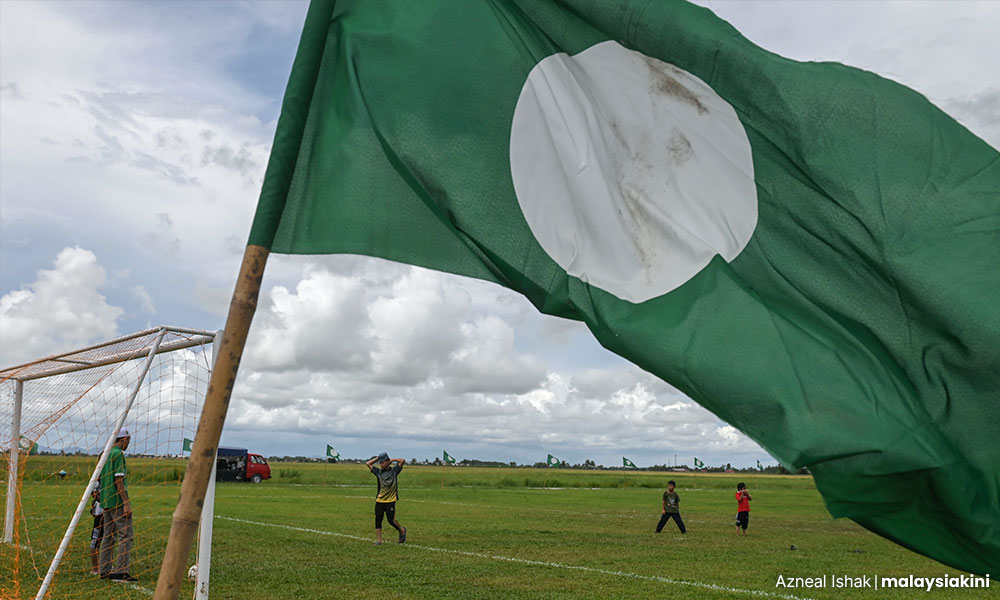
Not voting in GE16 will allow the Green Wave to sweep into the federal government. The avowed ideology, struggle, and vision of PAS is to establish Malaysia as a theocratic Islamic state and the full implementation of syariah law.
Sensitive ethnic conditions
Fourthly, sequencing, priority, and laying the groundwork for reforms are important. Malaysian politics and society after GE15 have become deeply divided along ethnic lines.
The following is the breakdown of all 165 parliamentary seats in Peninsular Malaysia.
Out of 86 parliamentary seats with 65 percent or more Malay majority, PN won 67, BN 13, and Harapan six;
Out of 32 parliamentary seats with 51 percent to 64 percent Malay majority, PN won four, BN eight, and Harapan 20;
Out of 47 parliamentary seats with non-Malay majority, Harapan won 46, BN one, and PN did not win any.
The coalition that received the most Malay support is in the opposition, while the one with the least Malay support is in the government.

It is necessary to act with sensitivity and caution because any attempt at reforms that may be perceived as trampling on Malay special rights will have implications for political stability and social cohesiveness.
For reform to truly last, it has to go beyond passing a law in Parliament. It requires gaining public acceptance for durable and sustainable structural policies by changing mindsets.
It has to follow a sequence and process. It begins with reassuring those who fear they will be losers that they will gain instead. This can only be done by the delivery of actual social benefits and economic performance.
Fortunately, the process has started. Socially inclusive programmes based on needs, regardless of race and religion, have produced benefits for all.
In many of these programmes, every community is a winner, and no specific community is a loser.
The GDP has improved: 2023 - 3.6 percent; 2024 - 5.1 percent, 2025 - 5.2 percent.
According to the Department of Statistics, as of Oct 8 2025, the median income in Malaysia has increased by 5.1 percent to RM7,017 in 2024, and the mean income increased to RM9,155.00 at a growth rate of 3.9 percent.

Total foreign investments have recorded historical highs for each year: 2023 - RM329.5 billion; 2024 - RM384.4 billion; 2025 - RM426.7 billion; Total for the 3 years - RM1.14 trillion.
The value of the ringgit has risen from US$1 at RM4.55 in 2023 to the present of US$1 to RM3.88. Tourist arrivals for 2025 totalled 42.2 million, the highest in Southeast Asia. Unemployment is at 2.9 percent, the lowest since 2015.
A total of RM15 billion has been allocated for Sumbangan Asas Rahmah and Sumbangan Tunai Rahmah for 2026 for more than 8 million recipients, with some eligible recipients getting RM4,600 at the highest. Budi95 offers subsidised fuel at RM1.99/litre when the market price is nearly twice that amount at RM3.72 per litre.
Returning to moderation, national cohesion
More specifically, gaining the trust of 65 percent of Malaysia’s population is crucial, without whom no party can govern.
Many non-Malays are upset by the incendiary rhetoric and hate speeches made by those relying on fear-based narratives and blame Anwar for not taking action against them.
Those involved have, in fact, been charged. However, legal coercion by itself is not enough to stop hate speech and racial discrimination, and in certain cases, arresting the perpetrators risks turning them into martyrs, which furthers their goals.

An Islamic epiphany revival is needed for those making these speeches to realise they do not accord with Islamic jurisprudential principles that prioritise “masalah” (public interest).
There is a need to address elements which frame Islam as intolerant of other cultures and religions, with no compassion for other faiths, with a narrow and extreme construct of religion and God.
It is critical to stop the spread of dangerous ideas of racism and narrow ethno-religious intolerance of other cultures and faith.
Madani values
Academic Tajuddin Rasdi says Madani values offer a viable alternative that a Muslim yearns for: modernisation, progress, wealth, and all the good things a civil society and civilised human existence can provide.
These are based on tolerance, mutual respect, compassion, and magnanimity in a liberating, creative, and inclusive society.

Malaysia Madani provides the foundation for returning to inclusive and progressive nation-building, based on the values of moderate Islam. It is the only path to a better tomorrow.
Conclusion
There are valid causes for the disappointments. Having chosen the destination to a better life, disappointment is not a reason for letting someone else choose a different destination for you.
It’s best not to change horses midstream. Let’s gird ourselves for one more push. Let’s not be remembered as the generation that surrendered our nation to a darker tomorrow.
WILLIAM LEONG is Selayang MP.
The views expressed here are those of the author/contributor and do not necessarily represent the views of Malaysiakini.