

YOURSAY | ‘Teach the full layered history.’
COMMENT | Restoring the Hindu-Buddhist foundations of Malay civilisation
FairPlay: This (restoring the Hindu-Buddhist foundations) is not going to happen anytime soon.
The majority community that led the formation of the nation we know today fear losing the only identity they want to be associated with.
Any other alternative historical view about the history and the formation of Malaysia as a sovereign nation is totally unacceptable to them.
Sadly, after 60-plus years as a sovereign nation, the politicians still want to divide the nation to maintain power and control, enabling them to shape the direction of the nation their way.
As a young sovereign nation, the real clear danger is this. United we stand. Divided we fall.
The best approach is not to replace one selective history with another, but to teach the full layered history - indigenous, Hindu-Buddhist, Islamic, colonial and modern - honestly and without fear.
Malay civilisation was not born in one moment, one religion, or one kingdom. It was layered by indigenous roots, Hindu-Buddhist influence, Islam, trade, and modern nationhood.
Exile: The historical record does not support the idea that a single, unified “Indian civilisation” arrived in the Malay Peninsula and bestowed civilisation upon a passive local population.
No political entity called “India” existed during the early centuries of interaction between South Asia and Southeast Asia. Instead, the region now grouped under the label “India” consisted of many separate kingdoms, languages, religions, and trading communities, often competing with one another.
The Cheras, Cholas, Pandyas, Pallavas, and later other regional powers did not act as representatives of one Indian nation or civilisation. They pursued their own dynastic, commercial, religious, and strategic interests.
The Malay Peninsula and the wider Malay Archipelago were already part of active maritime trading networks because the region was rich in natural resources, forest products, spices, gold, tin, and strategic ports controlling sea routes between East and West.
South Asian merchants, priests, and rulers came not as charitable civilising missions, but because Southeast Asia possessed wealth, economic opportunity, and geopolitical importance.
Trade was the primary driver of these interactions, though military intervention and conquest sometimes followed when commercial interests were threatened, or expansion became possible, as seen in the Chola attacks on Srivijaya in the 11th century.
At the same time, relations were not always exploitative or hostile. Southeast Asian rulers and South Asian powers frequently formed mutually beneficial alliances based on trade, diplomacy, religion, and shared security interests against regional rivals or piracy.
Local Malay polities were not merely recipients of foreign culture; they actively selected, adapted, and reshaped outside influences to suit local conditions.
What emerged in the Malay world was therefore not an imported “Indian civilisation,” but a hybrid maritime civilisation shaped by continuous interaction among many Asian cultures.
PinkJaguar7289: The article is broadly right that early Malay civilisation did not begin only with Malacca or Islam.
Research on Kedah Tua/Bujang Valley, Langkasuka, Sanskrit loanwords, royal titles and Hindu-Buddhist cultural layers give strong support to that argument.
But some claims need careful wording: the exact scale of Indian influence among ordinary people, the location/status of some early polities, and whether every custom mentioned is directly Hindu-Buddhist are still open to debate.
World Citizen: Yet another great piece by Ranjit Singh Malhi. He tells the truth as it is. Hello former minister Khairy Jamaluddin, what say you? You want historians to dare enough to write the truth, here you are.
When the subsequent governments try their level best to hide the true history of Malaya by promoting the works of professors like Solehah Yaacob, it just shows their national-level insincerity and the Malay inferiority complex. Of course, there are some exceptional Malays in their midst.
Unfortunately, Ranjit, as much as we wish the government and the majority population at large will come to the realisation and acknowledge the true history of Malaya, this will never happen in our lifetime, and frankly, that’s ok because the majority population will forever live in denial and be ignorant.
ScarletPanda9731: Ranjit, you nailed it! Thank you for presenting authentic history for the knowledge of all Malaysians. Let the whole world know all civilisations.
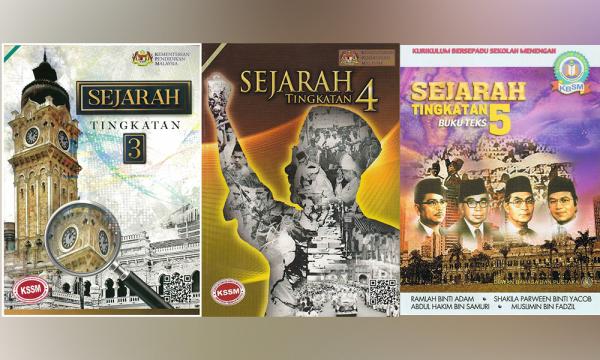
Our history book must be reviewed to present the true story. Let us not tell fairy tales to our children. Truth must prevail in the end. What is there to fear?
RR: Malaysia is fortunate that we have great historians like Ranjit to enlighten the masses and politicians on how to manage a multiracial, multireligious country.
We hope the current and future governments heed his advice for Malaysians of all races to live in peace and harmony, which is not the case in many countries.
Extremism of any sort should be abandoned. Let us put our heart and soul into a progressive Malaysia.
The above is a selection of comments posted by Malaysiakini subscribers. Only paying subscribers can post comments. In the past year, Malaysiakinians have posted over 100,000 comments. Join the Malaysiakini community and help set the news agenda. Subscribe now.
These comments are compiled to reflect the views of Malaysiakini subscribers on matters of public interest. Malaysiakini does not intend to represent these views as fact.