

KINIBIZ Abolishing open approved permits (APs) will stifle competition in the automotive sector and eventually leading to higher car prices, Pekema President Zainuddin Abdul Rahman told KiniBiz yesterday, adding that cutting import and excise duties will bring down car prices instead.
Pekema, or in full, Persatuan Pengimpot dan Peniaga Kenderaan Melayu Malaysia, is a bumiputera car dealers association and lobby group representing at least 98 authorised open AP holders.
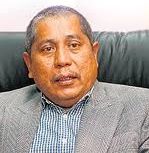 Zainuddin (
left
) was responding to recent proposals to abolish the current open AP system for vehicle imports.
Zainuddin (
left
) was responding to recent proposals to abolish the current open AP system for vehicle imports.
Last week, Mercedes-Benz Malaysia president and CEO Roland Folger told The Sun eliminating open APs could result in cheaper car prices and encourage manufacturers to increase local production.
"For me, there is one way we can reduce car prices. It's a simple solution to the issue (and that is to) do away with open APs," Folger told the daily last week.
On Wednesday, former finance minister Daim Zainuddin joined the fray . In a statement to Bernama , he too urged the government to consider abolishing open APs.
"Removing the APs would translate into cheaper cars for the rakyat," Daim was quoted as saying.
In an interview with KiniBiz , Pekema's Zainuddin said eliminating open APs would not lead to lower car prices. Instead, such a move will lead to higher car prices in a highly regulated automotive market such as Malaysia's, he claimed.
"If there are no longer any open AP holders, then there is no competition any more," Zainuddin said resolutely.
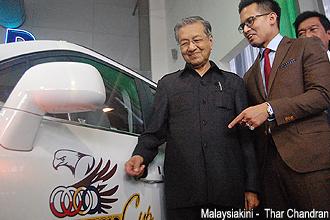 He intimated that franchise AP holders and official distributors would then have the liberty to price indiscriminately.
Pekema executive chairperson SM Shalahuddin SM Amin, who was also present during the interview, said open AP holders play an important role in the price discovery process.
"Open AP imported vehicles stabilise the price of newly introduced car models," he alleged.
Shalahuddin stressed that a distinction must be drawn between open APs and franchise APs. Both are essentially licences to import motor vehicles. An AP must accompany every vehicle imported into the country.
But open AP holders are typically smaller distributors that bring in a range of used or reconditioned vehicles, popularly termed as parallel imports, Shalahuddin explained.
Conversely, franchise AP holders are often locally incorporated distributors of popular European, Japanese or South Korean makes, authorised to bring in completely built-up (CBU) vehicles.
CBU imports aside, franchise AP holders are often linked to large conglomerates and also carry out local assembly of CKDs or completely knocked down cars.
Open APs undercut franchise APs
On the role of open AP holders in the industry, Shalahuddin said Pekema members have been credited with introducing popular models of foreign makes far earlier than official distributors have been able to, and at lower prices.
MPVs, short for multi-purpose vehicles or minivans, were first popularised by open AP importers more than a decade ago, he added.
Shalahuddin named the Honda Odyssey and Toyota Estima as examples of MPVs first brought in by open AP holders. Interestingly, the Toyota Estima has only just been introduced locally through official channels as the Toyota Previa by UMW Toyota.
Both Shalahuddin and Zainuddin said reconditioned vehicles brought in by open AP holders have, over the decades, given the public an affordable choice to equivalent vehicles brought in by the official distributors.
Therefore, parallel imports by AP holders serve to moderate downwards the price of many officially introduced vehicles, they alleged.
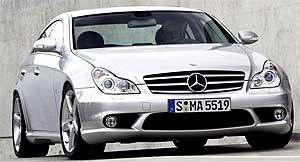 Parallel imports of high-end vehicles are known to undercut the prices of equivalent models introduced through official channels. Case in point: Mercedes-Benz Malaysia. Reconditioned Mercedes vehicles are popular parallel import buys.
Of late, Mercedes' Folger has been increasingly vocal on the issue of price undercutting. He has accused open AP importers of damaging sales of franchise AP holders who have taken the time and money to invest in local assembly and after-sales service centres.
If and when open APs are finally abolished, the clearest beneficiaries would be the franchise AP holders, such as Mercedes-Benz Malaysia.
According to Pekema's official statement released yesterday, the organisation suggested that to reduce the price of cars, there could be no other alternative than to cut excise and import duties.
"Reduce the excise and import duties and for certain, the price of cars will fall," Zainuddin said.
However, he believed such a move would be difficult for the government politically, because they would have to stomach a significant loss in revenue.
When asked if Pekema members would be concerned that such a move could lead to an erosion of their earnings, Zainuddin was unperturbed.
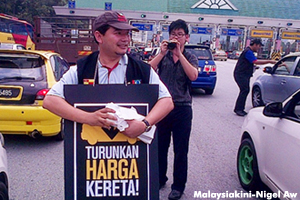 "We are happy to sell cheap cars," he said, also claiming that Pekema members have been doing just that since open APs were introduced in the 70s to increase bumiputera participation in the industry.
A reduction of excise and import duties would be assumed to be across the board, thus the reduction would also be applied to open AP imports, he added.
It is understood that open AP imports are also subject to import and excise duties. In addition, each vehicle brought in with an open AP is charged RM10,000, a fee that has been in place since 2010.
Zainuddin says this amounts to a sum of RM360 million in payments to the International Trade and Industry Ministry (Miti).
Not to mention, Zainuddin was quick to add, the RM1.8 billion tax bill paid to the Royal Malaysian Customs by Pekema members, a combination of excise duty, import duty and sales taxes.
Open AP imported vehicles make up 6 percent of total industry volume at approximately 36,000 vehicles per annum.
Franchise AP vehicles make up a smaller percentage, of only 4 percent of total industry volume.