
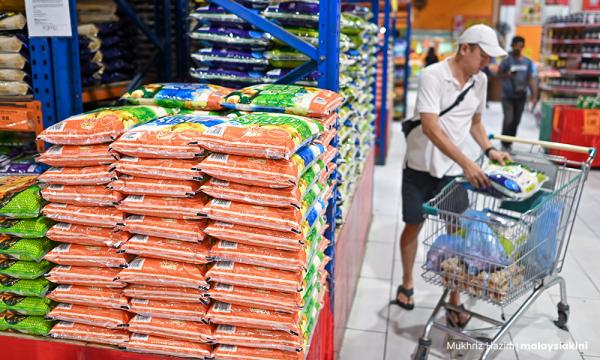

COMMENT | The perfect storm is hitting Malaysia’s paddy fields.
The ongoing war in West Asia, followed by a blockade in the Strait of Hormuz, has caused major disruption across many sectors and countries.
While most Malaysians are still comfortably shielded by the government Budi95 petrol subsidy of RM1.99 - the one thing local consumers can be grateful for amid this global crisis - a greater storm is brewing on the horizon, one which even the fuel subsidy can not weather.
Food security, especially on rice, is severely at risk. As a staple food and one of the main sources of calorie intake for Asians, Malaysia has long been dependent on imported rice to fill the stomachs of its people.
The core issue is that up to 44 percent of supply is dependent on imports from countries such as Thailand, Vietnam, India, Pakistan and Cambodia.
It was not until about a week ago that Agriculture and Food Security Minister Mohamad Sabu announced to increase the country’s rice stockpile from six to nine months as a precautionary measure to ensure stable supplies of this staple.
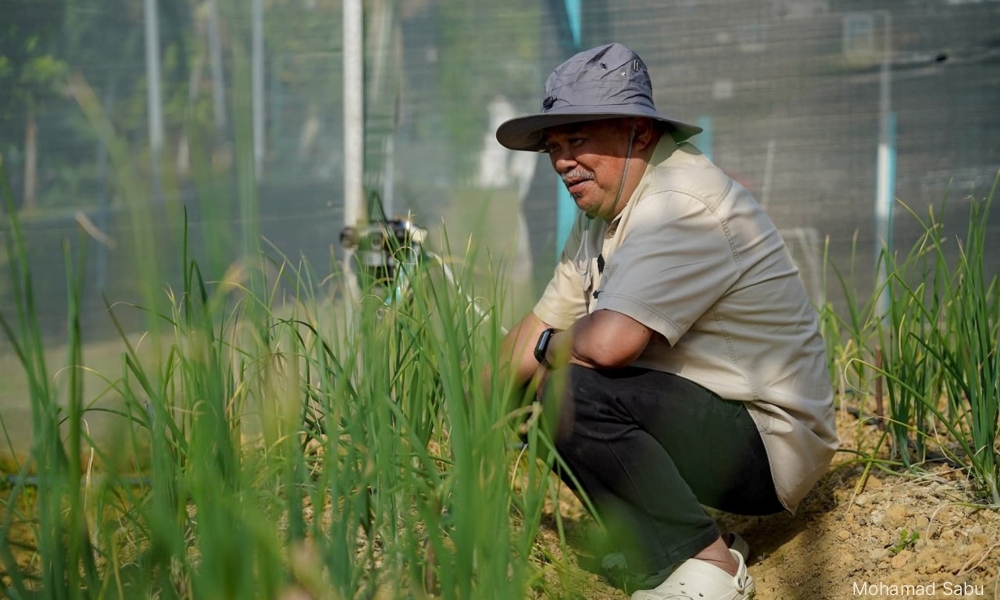
At this juncture, for lack of a better option, this step may be likened to hoarding more rice. This is merely a band-aid remedy for an old, festering wound. It does not address the structural problems of local rice farming, an issue that has been highlighted for years by researchers such as Khazanah Research Institute (KRI).
Import trap, decades of SSR stagnation
Statistics Department (DOSM) data quoted by the minister shows that Malaysia’s Self-Sufficiency Ratio (SSR) for rice stands at 56.2 percent. This is a sharp decline over the past years, back in 2020 and 2021, which stood at 62 percent to 65 percent.
Keep in mind that the National Agrofood Policy 2.0 (NAP 2.0) targets achieving 75 percent SSR by 2025. Instead of improvements, Malaysia is declining, falling further and further away from the very goal that it has set for itself.
To close the gap of insufficient local rice supply, Malaysia will have to import about 1.05 million metric tonnes of rice.
Based on DOSM and KRI dietary data, the average Malaysian consumes about 77kg to 80kg of rice per year. When multiplied by its population of 34 million, the total domestic demand is roughly 2.4 million to 2.5 million metric tonnes to feed everyone.
This has yet to take into consideration the consumption by foreign labourers that Malaysia’s industry is heavily dependent on, further stressing the national supply.
Hence, the Import Dependency Ratio (IDR) stands at 43.8 percent. So when geopolitical shock occurs, and we are faced with the reality of finite supply, every country looks inward to protect its own national interest.
Major rice suppliers to Malaysia, such as Vietnam, issued a strict directive on March 19 to place their own domestic market needs first. Unfortunately, this has trapped Malaysia into scrambling for a secure import source for itself.
Nine-month stockpile Illusion
Increasing the stockpile from five months to nine does not contribute towards producing any extra grain of locally grown rice, “it’s a band-aid, not a cure”.
This scenario will only mean that institutions such as Padiberas Nasional Berhad (Bernas) or any other mandated authorities need to urgently buy more foreign rice at unnaturally inflated crisis prices.
Purchasing massive volumes of rice in US dollars while maritime freight and insurance costs are at record highs will possibly drain millions, if not billions, from the national funds and widen the subsidy deficit, causing an “Economic Bleed”.
Additionally, the shelf-life realities of storing nine months' worth of white rice require immense logistical and pest-control upkeep to prevent spoilage, further driving up the overall costs that will be ultimately passed to consumers, which is something that most Malaysians may not foresee at this time.
Fuel today, fertiliser tomorrow
As Malaysians are very well insulated from fuel shortages, thanks to the government's effective energy policy and being a petroleum-producing country, other neighbouring countries that are key rice suppliers to Malaysia are not as fortunate.
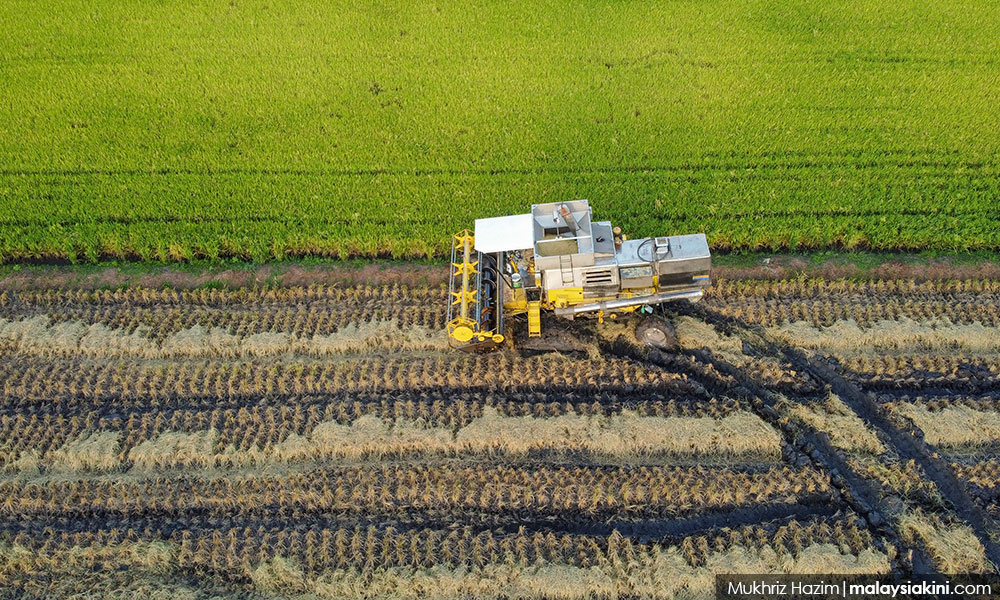
In Thailand, paddy farmers from Lopburi Province are reportedly already lamenting over their inability to harvest the ripening paddy as diesel shortages render the combine harvester useless while watching the ripening paddy dry up, ultimately making it unsellable.
This shall inevitably cause a drop in the overall output of the current harvest, the first jeopardy.
The continued fuel shortages will subsequently cause failure in the following season as well, because without working water pumps, ploughing machines and mechanised rice transplanters, paddy will not be sown, and there will not be any further harvest in the coming three to five months, the second jeopardy.
Similar situations had been reported along the Great Mekong River Delta, such as Vietnam’s Đồng Tháp and An Giang provinces, both rice-producing areas.
Agricultural chemicals and fertilisers are facing chokepoints at the Strait of Hormuz blockade, while other producers, such as China, halting exports adds to the supply disruption of global urea and nitrogen-based fertilisers.
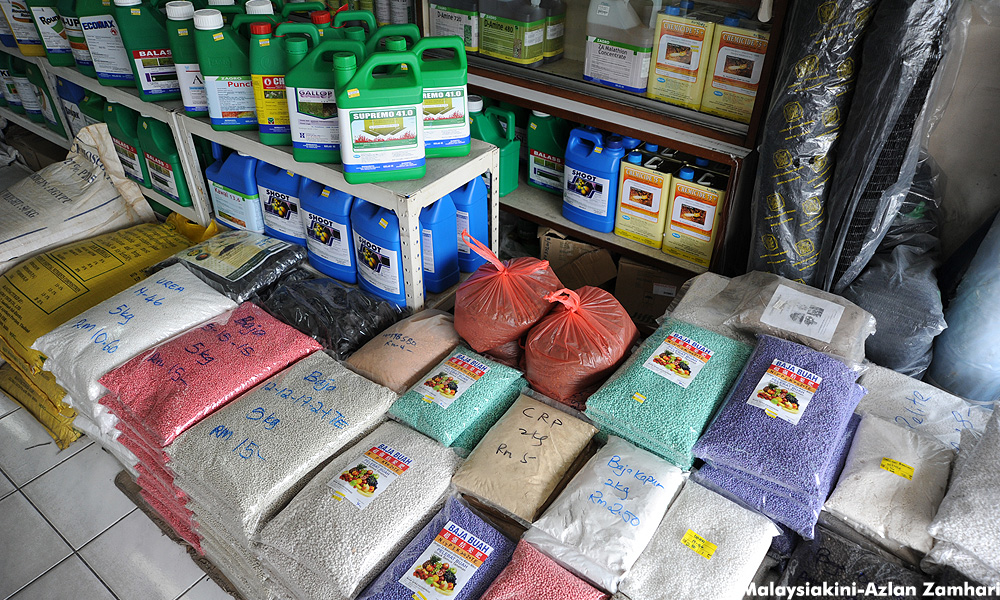
Without these essential inputs, Malaysia and other rice-producing nations' upcoming planting seasons will face the threat of barren soils and severely degraded yields.
In short, it is only a matter of time before Malaysia’s rice SSR could drop even further below 56 percent next year, while other countries face the same challenges as well.
By then, where else can Malaysia turn to? However cheap the petrol is, it can’t fill a hungry stomach. What good does it do if the car fuel tank is full, but people go to bed on an empty stomach?
From reactive hoarding to proactive sovereignty
In conclusion, Malaysia cannot "buy" its way out of a global food and fuel crisis simply by expanding a warehouse stockpile.
Apart from the stockpiling of rice, another practical short-term measure is that Malaysia will have to strike strategic mutual assistance on fuel supply for countries like Thailand and Vietnam, so that they may continue to grow rice and secure Malaysia’s supply.
In the long run and the path forward, the government will have to take this shock as a serious wake-up call. Findings and prescriptions by KRI research on the local rice industry must be taken seriously, while the National Food Security Action Plan 2026–2030 will need a greater boost and commitment by the cabinet.
The government must shift funds from reactive import subsidies to structural domestic reforms. This may include looking into decentralising the rice monopoly while allowing the markets’ entrepreneurial will to become a natural catalyst for growth.
Updating the Control of Padi and Rice Act 1994 (Act 522) to encourage high-yield paddy, premium farming, and aggressively transition to renewable-powered smart farming to decouple local agriculture from West Asian fossil fuels and other global shocks.
Ultimately, we will have to start learning how to swim through these turbulent waters, or risk drowning in an unforeseeable future global crisis.
JOHN OOH is a legislative researcher, former Penang Island City Council councillor and former Rural Industry Entrepreneur Organization secretary-general.
The views expressed here are those of the author/contributor and do not necessarily represent the views of Malaysiakini.