

The Shared Prosperity Vision 2030 (SPV 2030), published in 2019, is an important document for Malaysians that brought new hope to all Malaysians with promises of prosperity and sustainable economic development that is inclusive and more equitable.
In order to achieve this noble quest, the Malaysian government must be determined and committed to mobilise all efforts towards this economic vision.

The 12th Malaysian Plan (12MP; 2021-2025) and the 13th Malaysian Plan (13MP; 2026-2030) are two other important documents that can function as basic policy documents that can be used to trigger and accelerate the national economy towards an inspired national economy as envisioned in SPV 2030, said Prof. Muzafar Shah Habibullah, a Senior Economist at the EIS-UPMCS Centre for Future Labour Market Studies (EU-ERA).
“This acceleration is very important because the direction and target of Malaysia's economy has already deviated far and was stalled due to the political instability that occurred after GE14 [the 14th general elections] and this situation became worse with the twin crises that hit Malaysia – the health crisis caused by the outbreak of the Covid-19 pandemic, and the economic crisis from the spiralling cost of living in 2020 and 2021," he said.
The government’s Budget that is presented and proposed annually must be generated and utilised to support the policy goals of the 12MP and beyond towards achieving the goals under SPV 2030. In this regard, Budget 2023 is a very important budget to shift and boost the national economy to the original targets of 12MP quickly and accurately. This is because Malaysia only has three more years to achieve the goals contained within 12MP and hence reach half of the SPV 2030 goals, with the remaining SPV 2030 goals to be assigned in the subsequent 13MP.
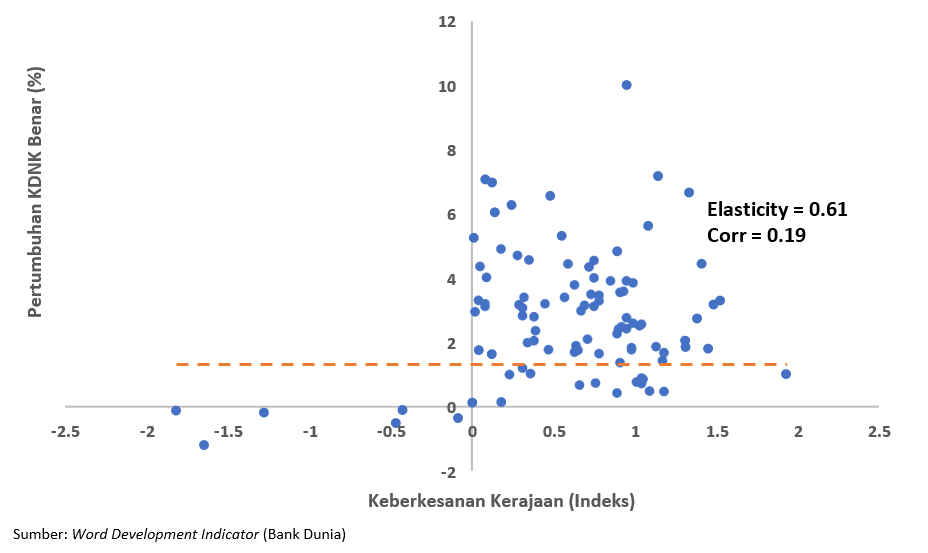
Malaysians have of course learnt that political stability is very important if they want to enjoy a comfortable life and a better standard of living, at least at pre-Covid-19 levels. Studies have already shown that political stability can lead to higher economic growth. Apart from that, government effectiveness can also bring the country's economy to a better level of growth. Figures 1 and 2 clearly show that a 1% increase in political stability can increase the nation’s economic growth by 0.25% while a 1% increase in government effectiveness will increase the country's economic growth by 0.61%.
Figure 1. Correlation between political stability and economic growth
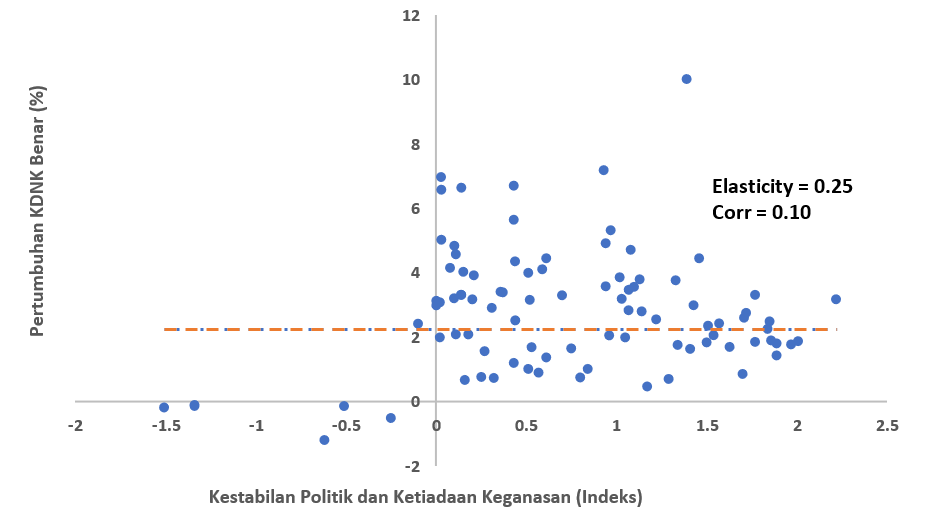
Figure 2: Correlation between government effectiveness and economic growth
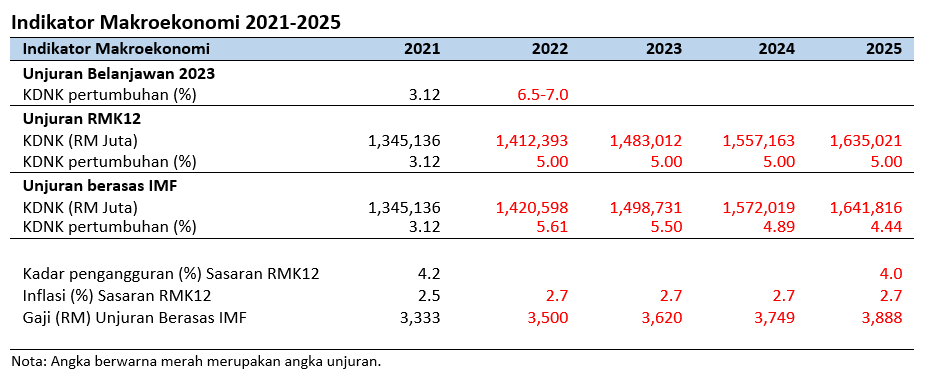
The above shows that the 12MP forecasts an average GDP growth of 5.0% per annum (4.5-5.5% for the 12MP period of 2021-2025) while the International Monetary Fund (IMF) forecasts 5.61% GDP growth for 2022 and slower growth rates in 2023-2025. Meanwhile, Budget 2023 projects 2022 GDP growth to reach as high as 6.5-7.0%. Therefore, to achieve the 6.5% growth forecasted for 2022, the ruling government must be able, dedicated and experienced to drive the country's economy to that level of growth.
Government effective amid political stability, which was once in place for 60 years, will allow an experienced government to achieve high growth and also lower the unemployment rate, stabilise inflation, and raise wages and salaries, said Muzafar Shah.
12MP targets an unemployment rate of 4.0% in 2025. This implies that the unemployment rate should decline in 2021 as compared with 2021. An efficient, experienced and stable government with effective policies can certainly maintain inflation at an average of 2.7%, he said, adding that policies that support the labour market will also be able to boost the workers’ average wage and salary to a better level in the 2022-2025 period.