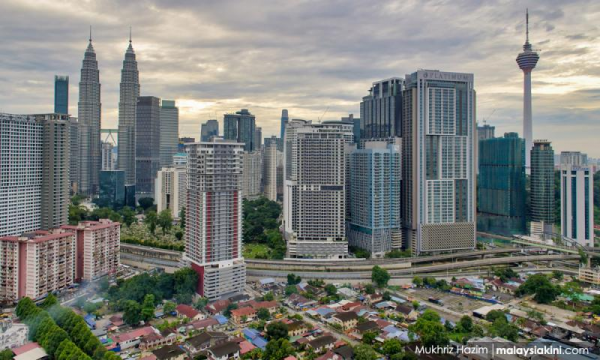

Political stability is very important, especially for a developing country like Malaysia. The experiences of developing countries around the world have shown that economic development can be achieved through political stability.

According to Associate Professor Dr. Mohd Yusof Saari, Chief Economist at Centre for Future Labour Market Studies (EU-ERA) and Advisor to the Minister of Human Resources & Emiratisation, UAE, a country would have better prospects in implementing economic development more quickly and effectively in a shorter period of time if there is political stability.
In context of the current economic situation, political stability is crucial to Malaysia’s economic recovery and development.
Firstly, let's understand the economic outlook for 2023-2024.
Given that the world economic growth is projected to contract in 2023 and 2024, efficient economic governance is required to steer Malaysia's economic recovery. A contraction of the world economy in 2023 is almost a certainty, and expected to sustain till 2024. The World Bank projects the world economic growth to shrink to 2.9% in 2022 compared with 5.7% in 2021. The Organisation for Economic Co-operation and Development (OECD) also projects slower economic growth in 2022 compared with earlier projections (see Figure 1). In 2023 to 2024, the world economy is expected to grow at a rate of 3% per annum, much like in 2022. This projection is based on several economic factors, including the slow recovery from the impact of the Russia-Ukraine war, deepening inflationary pressures, and the cost of living crisis.
What does the projected rate of the global economy growth mean for Malaysia? As Malaysia is a small country that is open and trades, a slowdown in the world economy would be a drag on Malaysia's economic growth, slowing it down too.
The situation in Malaysia is largely influenced by the global economic environment. The Malaysian Ministry of Finance at the presentation of the 2023 Budget projected the nation’s GDP growth at around 4% to 5% for 2023. For the record, the economic growth in 2022 is projected to be higher at an estimated 6.5% to 7.0%. The slower economic growth in the coming year will challenge Malaysia in its overall economic recovery process, including a "recovery" from the cost of living crisis.
Figure 1: Global economic slowdown forecasted for 2023-2024
The prospect of a contraction in the global economy has an impact on the momentum of Malaysia’s economic recovery.
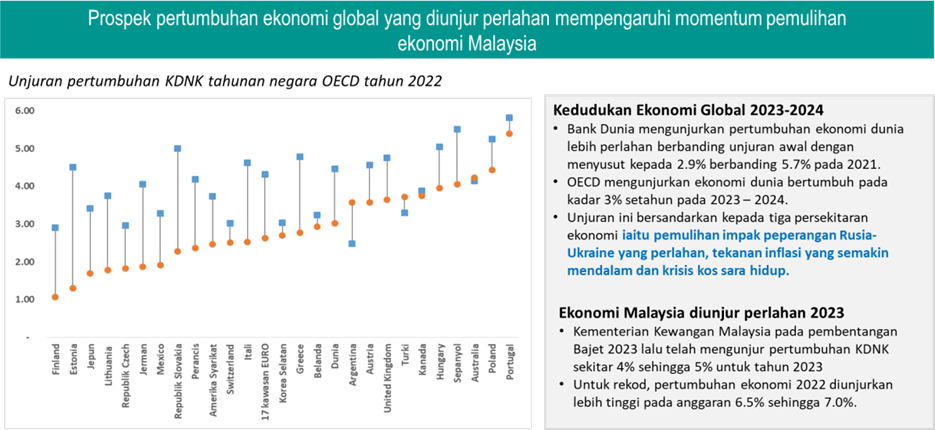
Figure 1 and the explanation above clearly points to a contraction in economic growth in the world and in Malaysia in 2023 to 2024. The situation would turn worse if the world economy records negative growth and experiences a recession.
Secondly, let us understand how political stability in the past few decades had contributed to economic development.
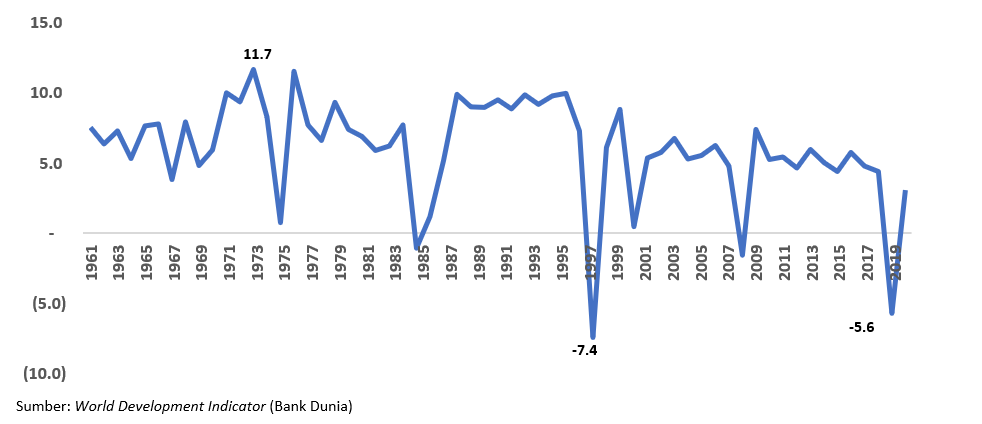
Political stability contributed to the successful recovery from economic crises. Malaysia's GDP growth since 1961 shows an economic movement that is on an upward trajectory. Malaysia is one of the 12 low-income countries that have recorded average growth of 6% per annum (see Figure 2). This high growth has helped the socio-economic development of the people and narrowed the income gap.
Figure 2 shows that since Malaysia’s independence in 1957, its GDP growth had contracted several times as a result of its economy’s exposure to several global economic crises. Among them, the oil and financial crisis in the mid-1970s; the fiscal balance of payments and financial crisis in the mid-1980s; and the Asian financial crisis in 1997 which resulted in a sharp contraction of GDP to -7.4% in 1998. In the 21st century, the outbreak of a global financial crisis followed by an economic crisis in 2008 once again plunged the Malaysian economy into contraction. These economic crises have been successfully addressed by Malaysia to ensure its economic growth is back on track.
The political instability in the country since the beginning of 2020, coupled with the onset of the Covid-19 pandemic, caused a sharp contraction in Malaysia's GDP, which shrunk 5.6% in 2020. The uncertain political environment, together with the collapse of the economy due to the Covid-19 pandemic, put intense pressure on Malaysia; such a situation is unprecedented. Inefficient economic governance during the pandemic period, such closure of businesses regardless of their socio-economic impact, further added to the "injury" of the economy. Therefore, a change in leadership is expected to provide a favourable environment for economic recovery and growth.
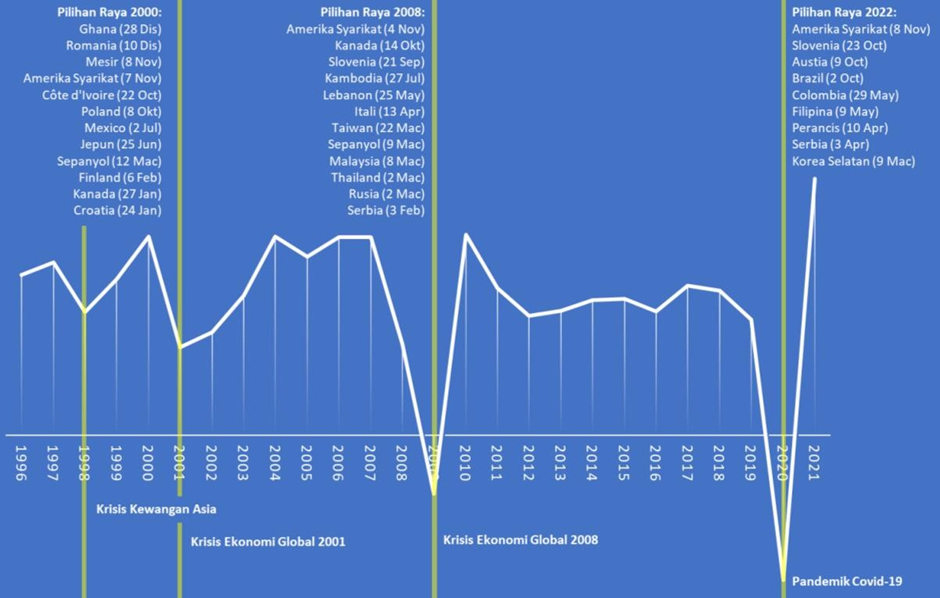
It is clear that in Malaysia's experience, political stability is crucial to efficient economic governance. In less than two months, we will enter the year 2023; this means we are close to facing the global economic crisis phase. As such, political stability is needed to face the impending challenge. The decision to dissolve Parliament to obtain political stability is the right step taken to ensure Malaysia's readiness to face the economic crisis next year. If the general elections are held in 2023, we are likely to face the double risk of political instability and a global economic crisis. The following Figure 3 gives us an indication that other countries also hold general elections when the economy is not in crisis.
Figure 3: World economic growth trends and list of general elections held before a global economic recession, 1996-2021