


For years, artificial intelligence sat in a familiar holding pattern across enterprise Asia-Pacific (APAC): promising, powerful, but largely confined to pilots and proofs of concept. As 2026 approaches, that phase is decisively coming to an end.
Businesses across the region are now embedding AI directly into their core operations - not as a side experiment, but as infrastructure that shapes how decisions are made, services are delivered and growth is pursued.
According to the IBM Institute for Business Value’s Five Trends for 2026 report, AI is shifting from experimental to essential, marking a structural change in how organisations compete and adapt.
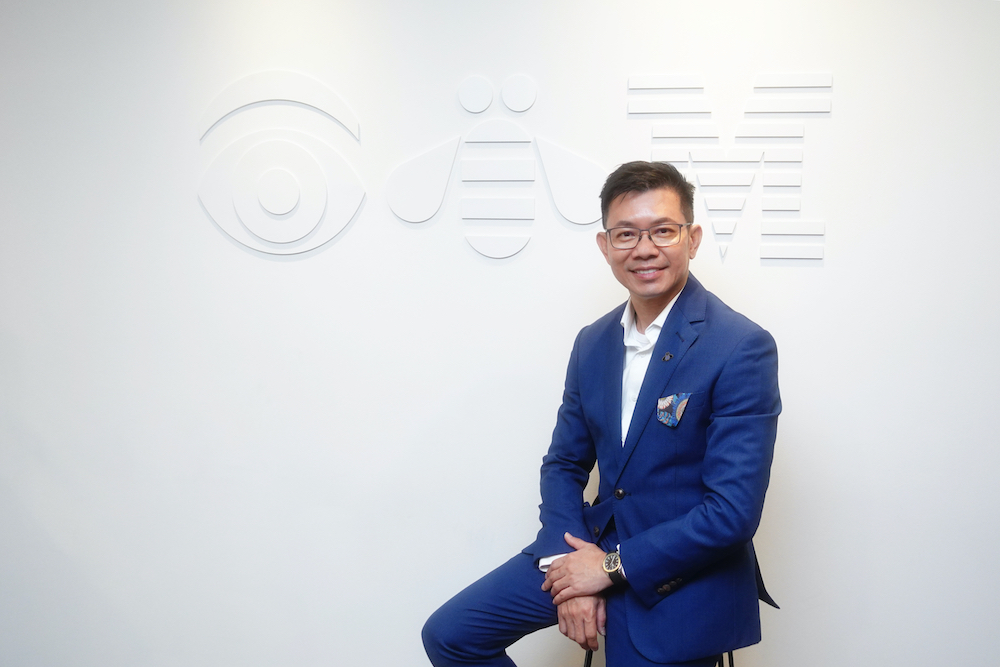
“As we look to 2026, uncertainty isn’t holding us back - it’s propelling us forward,” said Dickson Woo, Country General Manager and Technology Leader at IBM Malaysia.
“We expect AI to shift from experimental to essential. With sovereign AI becoming the foundation of trusted innovation and quantum computing emerging as the next leap, the future is no longer something to predict - it’s something we can shape.”
That sense of urgency underpins five major business and technology trends identified in the report, each reflecting how enterprises in Malaysia and across APAC are responding to volatility, regulatory complexity and rising expectations from customers and employees alike.
Speed becomes a competitive weapon
Fast decision-making is no longer a nice-to-have. Nearly all executives surveyed say they increasingly need to make decisions quickly, while 90 percent believe they will lose their competitive edge if they cannot operate in real time.
What is changing is not just the pace of decisions, but how they are made. AI systems are evolving from tools that assist humans to systems that can act - monitoring conditions, triggering responses and optimising outcomes within defined guardrails.
For APAC enterprises navigating supply chain disruptions, cost pressures and fragmented markets, AI-driven speed is increasingly viewed as a strategic necessity.
2. AI sovereignty moves into the mainstream
As AI becomes more embedded in business operations, control over data, models and infrastructure is rising sharply up the agenda.
The report defines AI sovereignty as an organisation’s ability to govern its AI systems at all times - and by 2026, 93 percent of executives say it must be part of their business strategy.
This is driving a shift towards indigenous AI models and sovereign cloud infrastructure across APAC, particularly in regulated industries such as banking, telecommunications and the public sector.
The sovereign cloud market in the region is projected to grow rapidly, reflecting demand for systems that meet national requirements around data residency, security and compliance.
In Malaysia, the push for sovereignty is also practical. Multilingual needs, cultural context and sector-specific regulation make one-size-fits-all global models less effective. Enterprises are increasingly looking for AI that can be governed locally while still operating at scale.
3. Trust becomes the currency of innovation
As AI becomes more visible to customers, trust is emerging as a defining factor in whether new products and services succeed.
While more than half of consumers say they are willing to accept flaws in cutting-edge AI-enabled services, transparency remains non-negotiable.
Most consumers want to know when they are interacting with AI, and many say they would switch brands - or even pay more - to avoid hidden AI. For businesses, this shifts transparency from a communications issue to a design principle.
In APAC’s trust-sensitive markets, organisations that clearly demonstrate how AI is used and what value customers receive in return are more likely to unlock room for innovation.
4. Employees are ready - even if roles change
One of the report’s more striking findings is the shift in workforce sentiment. Rather than fearing AI, employees increasingly expect it to reshape their roles.
More than 60 percent believe their jobs will change significantly by 2026, and an even larger share are confident they can keep up with new technologies.
Many workers say AI makes their work less repetitive and more strategic, with a majority open to working alongside AI agents. Nearly half even say they would be comfortable being managed by one.
For employers across Malaysia and the wider region, this presents an opportunity to rethink productivity, skills development and job design - particularly in sectors facing persistent talent shortages.
5. Quantum readiness can’t wait
The final trend looks beyond today’s AI deployments to what comes next. While quantum computing is still emerging, the report cautions that the timeline to act is shorter than many organisations assume.
Companies that prepare early by participating in ecosystems and partnerships are far better positioned to accelerate adoption and limit disruption.
Rather than a standalone technology play, quantum readiness is becoming an organisational challenge - one that rewards collaboration, shared data and collective experimentation.
From technology adoption to business reinvention
What stands out for Malaysia is how quickly these shifts are converging across sectors. AI adoption is no longer confined to technology leaders or digital-native firms, but is taking hold in banking, manufacturing, telecommunications, energy and public services alike.
As enterprises move from experimentation to execution, the ability to deploy AI that is fast, governed and trusted will increasingly shape competitiveness.
For Malaysian businesses looking towards 2026, the challenge is no longer whether to adopt AI, but how deliberately they build it into their operations - in ways that reflect local realities while remaining globally competitive.