

Kuala Lumpur, 27 August 2025 – As Malaysia’s property stock matures, industry players are warning that funding shortfalls and outdated maintenance practices could erode asset values and impose hidden costs on homeowners and investors. This comes at a critical juncture, with a significant share of high-rise condominiums in Kuala Lumpur and Selangor entering major refurbishment cycles without sufficient funds set aside.
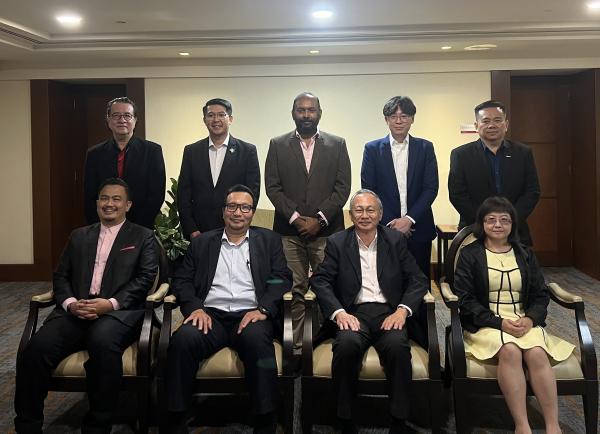
To address these concerns, Nippon Paint (Malaysia) Sdn. Bhd (“Nippon Paint”) hosted a roundtable on the Sustainable Refurbishment of Existing Buildings, bringing together industry leaders from the Ministry of Housing and Local Government (KPKT), the Malaysian Institute of Property and Facility Managers (MIPFM), the Malaysian Institute of Architects (PAM), the Association of Valuers, Property Managers, Estate Agents and Property Consultants in the Private Sector Malaysia (PEPS), the Green Building Index (GBI) and the Royal Institution of Surveyors Malaysia (RISM). The discussion focused on the two most pressing refurbishment needs facing Malaysian properties today, which are waterproofing and repainting, particularly for properties in the 11–20 year age bracket.
Outdated Sinking Fund Framework
At the heart of the problem is Malaysia’s statutory 10% sinking fund contribution, a formula that was set decades ago and is now unsustainable.
PMGR SR Nageswaran Muniandy, Member of MIPFM, explained: “The real challenge starts once a building hits 6–10 years, with waterproofing among the most common and costly issues. By the time properties are over 20 years old, modernisation or full upgrading is often needed. However, with sinking fund contributions capped at 10%, most management bodies can only afford the bare minimum.”
The result is a domino effect whereby deferred works lead to worsening property conditions, which in turn erode property values and investor confidence, a risk that extends beyond individual households.
Panellists also warned that underfunding not only delays essential work but also drives building owners toward low-cost, short-term fixes that fail to address root causes. Aaron Ang, Senior Manager of Nippon Paint Malaysia, shared, “Even the best waterproofing systems will fail if applied poorly or specified incorrectly. For example, waterproofing solutions are often used without addressing the underlying defects, which only postpones the problem rather than solving it. Without stronger standards and enforcement, new buildings can begin leaking within three to five years.
“That’s why at Nippon Paint we have established a strict waterproofing procedure that includes periodic site inspections and close supervision to ensure proper application. This process safeguards against workmanship errors by enforcing best practices at every stage: pre-maintenance, during maintenance, and post-maintenance, delivering long-term durability and performance.”
Short-Term Fixes, Long-Term Liabilities
The roundtable also highlighted Malaysia’s largely reactive approach to property maintenance. Too often, it only acted upon when damage became visible, at which point repairs were more expensive, disruptive, and less effective.
Ar. Sarly Adre Sarkum, PAM past president and CEO of Green Building Index (GBI), pointed out: “Preventive care, backed by proper manuals, certified professionals, and enforceable standards, can break this costly cycle. If we shift from reactive to preventive practices, we extend building lifespans and reduce long-term financial strain on owners.”
Adding to the challenge is the rise of unqualified inspectors and contractors who misdiagnose problems. “We often see building managers turning to unqualified parties who worsen the situation. While Nippon Paint provides courtesy inspections through certified applicators, the industry really needs proper regulation and recognition of competent professionals to safeguard owners,” added Ester Goh, Senior Manager of Nippon Paint Malaysia.
Waterproofing: Cosmetic Issue or Hidden Cost Driver?
Panellists stressed that waterproofing issues are usually dismissed as minor inconveniences, such as damp walls and peeling paint, which can actually be the first warning signs of deeper problems.
“Waterproofing failures should never be dismissed as cosmetic. Once leaks or dampness set in, they compromise comfort and safety, damage building structures, and in the long run, the cost is far more than the preventive upkeep,” noted Ester.
Panellists added that even the best waterproofing systems require proper surface preparation, certified workmanship, and periodic inspections. With warranties typically lasting five to ten years, experts warned that many buildings fail to budget for system replacement at the end of that cycle, leaving management committees scrambling for funds when failures inevitably surface.
Ester added, ”To address this, Nippon Paint also provides a dedicated re-waterproofing service, carried out by certified applicators and backed by multiple safeguards, including product warranties, workmanship warranties, and independent verifications such as SIRIM certification, Green Label certification, and lab test reports. These measures ensure that waterproofing solutions are not just applied, but applied correctly, delivering long-term durability and confidence for property owners.”
Policy Reform Critical for Keeping Up
Panellists agreed that, beyond shifting practices, Malaysia urgently needs policy reform to ensure refurbishment practices keep pace with rising costs and urbanisation. These include:
Revising the sinking fund formula to reflect the amortisation of major building components
Mandating maintenance manuals for all new developments
Integrating Malaysian Standards such as MS1294 and MS1063 into the Uniform Building By-Law (UBBL) to ensure consistent compliance
“Malaysia already has waterproofing standards, but they are not embedded into the UBBL. Without regulatory backing, compliance is weak. Stronger frameworks are needed to ensure durability, protect property buyers, and keep pace with urbanisation,” added Sarly.
A Market Poised for Growth
Despite these challenges, the panellists agreed that the sector presents significant growth opportunities. With Malaysia’s urban centres dominated by ageing condominiums and strata properties, demand for high-quality refurbishment solutions is expected to rise.
“Buildings are long-term assets. Poor upkeep doesn’t just inconvenience residents, it reduces property values and undermines confidence in entire neighbourhoods. A healthier refurbishment ecosystem benefits homeowners, investors and the wider economy,” concluded Aaron.
By convening regulators, professional bodies and industry stakeholders through forums such as this roundtable, Nippon Paint underscored its commitment to shaping a stronger building refurbishment ecosystem.
Central to this is the company’s Total Coating & Construction Solutions (TCCS), a holistic system that ensures every stage of refurbishment, from drymix, waterproofing to repainting, is carried out with compatible systems, certified applicators, and long-term warranties. These solutions address immediate issues like leaks and surface deterioration, extend building lifespans, safeguard property values, and reduce financial strain on owners. In short, TCCS delivers the durability and assurance that Malaysia’s ageing property stock urgently needs.
In line with this, Nippon Paint continues to innovate and expand its comprehensive waterproofing portfolio, serving both new projects and refurbishment works. Its systems cover roofs, wet areas, basements, water-retaining structures and walls, with solutions ranging from liquid membranes (NippoSEAL) to sheet membranes (NippoGARD) and cementitious membranes (NippoCEM). These integrated options provide long-term protection against leaks and deterioration, safeguarding building value while reducing financial strain on owners.
For further information about Nippon Paint’s Total Coating and Construction Solutions (TCCS) – Refurbishment Solutions, please visit https://professional.nipponpaint.com.my/refurbishment
This content is provided by Nippon Paint.
The views expressed here are those of the author/contributor and do not necessarily represent the views of Malaysiakini.
Interested in having your press releases, exclusive interviews, or branded content articles on Malaysiakini? For more information, contact [email protected] or [email protected]